03/08/2026
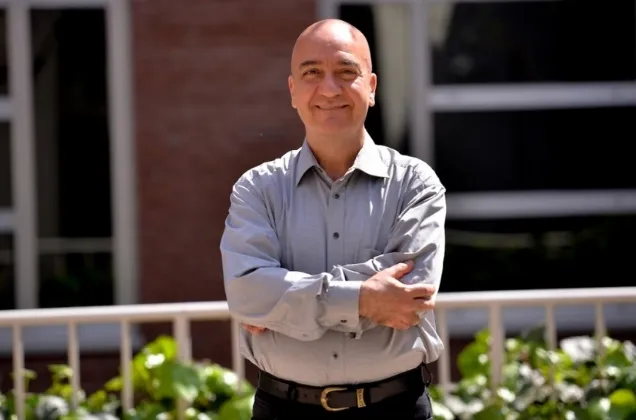
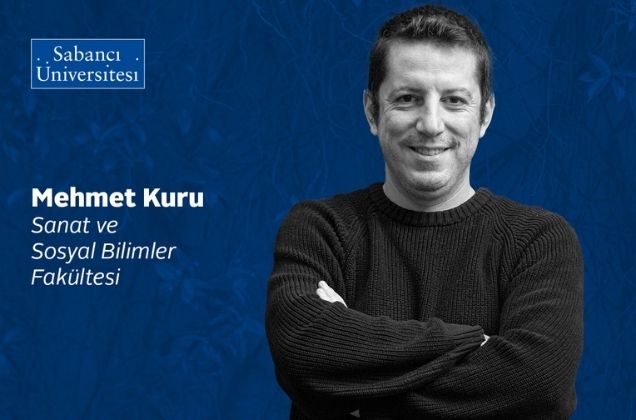
Dr. Mehmet Kuru from Sabancı University's Faculty of Arts and Social Sciences is a historian who stands out for his work in early modern Ottoman history, the history of Mediterranean port cities, digital humanities, and cultural translation, rather than Ottoman political history. One of his most popular projects, "Aesop Alla Turca: An Examination of Aesop Translations from the Pre-Tanzimat Period in the Context of Cultural Translation," was awarded funding under the TÜBİTAK 3501- Career Development Project.

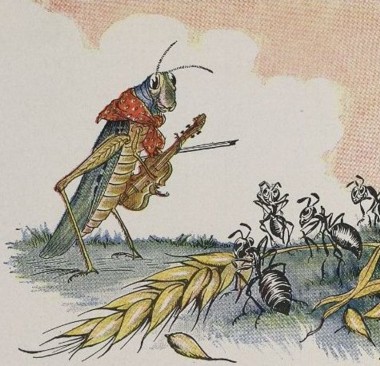
A Grasshopper gay
Sang the summer away,
And found herself poor
By the winter's first roar.
Is there anyone who hasn't heard the story of the ant and the grasshopper, translated by Orhan Veli Kanık from La Fontaine, during their primary school years? La Fontaine rewrote his fables in a poetic style, drawing inspiration from ancient mythologies, particularly Aesop's Fables, as well as from Phaedrus and Eastern literature. The fables of Aesop, a storyteller known to almost everyone and dating back thousands of years, have become part of humanity's collective memory. In these fables, animals, plants, and inanimate objects think and speak like humans; gods and humans interact; and at the heart of these tales lie the veiled criticisms and objections of the masses to their rulers.
Orhan Veli emphasized that these are neither tales nor stories, but rather should be considered fables. The question of when these fables were first written down is a subject of serious research in all cultures worldwide.

Aesop Alla Turca
So, when were these stories first told in Turkish in Türkiye? Associate Professor Mehmet Kuru pursues this question, resulting in a study with multifaceted interactions. Dr. Kuru describes his project titled "Aesop Alla Turca: An Examination of Aesop Translations from the Pre-Tanzimat Period in the Context of Cultural Translation" in the literary research journal Nesir (April 2022) as follows: “The questions of when and how these stories were written down and told in Turkish form the main axis of this research project. These questions should not be considered merely a playful curiosity pursued by those who enjoy listening to, telling, and reading stories. On the contrary, the answers to these seemingly simple and even charming questions are of such importance that they can offer a new ground for discussion to researchers working on various texts from different periods and coming from various disciplines such as cultural history, Old Turkish literature, and the history of translation.”
Methodology of the Study
This study examines pre-Tanzimat translations of Aesop's Fables, among the earliest literary translations from Western languages into Turkish, within the framework of a cultural translation approach. The research identified and classified eight manuscript and one printed Turkish translation found in various libraries in Europe, and evaluated the texts in four main groups based on their relationships. The Turkish translations were compared with the source texts using the basic Aesop indexes prepared by Perry, Chambry, and Gibbs; thus, the relationships and differences between the texts were revealed using the comparative text analysis method. The study focuses on the cultural context in which the translations were produced, textual transformations, localization strategies, and the translators' aims, analyzing the literary and cultural transformation that Aesop's narratives underwent during their translation into Ottoman Turkish.
In summary, the aims of the study are:
- To systematically examine Aesop's fables translated into Ottoman Turkish.
- To demonstrate that translations are not only linguistic transfers but also cultural adaptation processes.
- To question the view that the first translations from the West in Turkish literature began with the Tanzimat period and to present new data that may push this date back approximately two centuries.
Dr. Kuru expresses the potential implications of this study for different disciplines as follows: “Therefore, thanks to the field that can be labeled as ‘Aesop studies,’ the opportunity arises to compare Turkish translations of Aesop made in the pre-Tanzimat period with the source texts. In this context, the texts I examined within the scope of the project will prepare the ground for new studies for experts working on cultural history, translation history, old Turkish literature history, and translation studies, and will contribute to various discussions from different disciplines, thus guiding the studies in these disciplines.”
How did an economic historian come into being?
“From the very beginning, in high school, I didn’t have a dream of becoming a historian 20 years later,” says Dr. Kuru, describing his journey that led to becoming a historian and academic: “First, I attended a science high school, then I studied business administration at Galatasaray University. I still wasn’t very ambitious about becoming a historian. But after completing my postgraduate studies in history at Sabancı University and then being accepted into the doctoral program in history at the University of Toronto, I embarked on this path, receiving my PhD in 2017 and becoming a historian.”
“I read a book, and my goal changed.”
According to Dr. Kuru, his interest in history is sparked by the books he reads: “Oktay İhsan Anar's novel Amat, which tells the story of events on a ship called Amat that sailed from Istanbul in the 17th century, drew me to the subject of Ottoman pirates. I researched pirates in my master's thesis. That's how I entered the history of the Mediterranean. During my doctoral studies, I worked on Mediterranean port cities. My focus was on the emergence of the port city of Izmir. But gradually, archival material pulled me towards economic history. I hadn't gone to an economic historian professor to become an economic historian from the beginning; my professor was Natalie Rothman, who worked in cultural history. I worked with her, but she gave me freedom. That's why I gradually shifted towards economic history.”
The Ottoman Empire's Ordeal with Money
In his book, The Ottoman Empire's Ordeal with Money, Dr. Kuru outlines the general characteristics of the Ottoman economy and the 16th-17th century crisis within the context of economic history. He answers many questions, including the building blocks of the Ottoman economy, debasement, correction, the two-zone monetary policy, how silver from America affected the economy, how the value of gold and silver was determined, and the solutions produced by the Ottoman bureaucracy to crises. The book's main thesis is that money is not merely a medium of exchange; it is a decisive factor in the political power, social order, and international standing of the state. The successes and failures of Ottoman monetary policies are evaluated in conjunction with the empire's rise and fall.
The impact of the discovery of America on the Ottoman economy occupies a significant place in the book. According to Dr. Kuru, the large quantities of silver extracted by the Spanish from silver mines in America, particularly in the 16th century, reaching Europe and then Ottoman territories, significantly impacted the Ottoman economy. In short, while the influx of silver from America initially seemed to bring wealth to the Ottoman Empire, the abundance of silver led to a devaluation of currency, increased inflation, a disruption of the state's financial balance, and a deepening of economic problems. However, Dr. Kuru emphasizes that the financial difficulties experienced by the Ottoman Empire were not solely due to American silver; the cost of wars, the tax system, administrative problems, and monetary policies also played significant roles. Above all, he points out that the high cost of living put peasants, merchants, and soldiers in dire straits, and that these economic difficulties were among the factors contributing to the emergence of social events such as the Celali Rebellions.
Other Works
Mehmet Kuru is one of the pioneers in the use of artificial intelligence in historical research. He is particularly involved in the AKIS (Automatic Transcription of Ottoman Turkish Documents using Deep Learning Technologies) project, working on the automatic transcription of Ottoman Turkish manuscripts using deep learning.
Another area of research is environmental history studies focusing on climate, demographics, labor, and agricultural relations in early modern Anatolia.
In his doctoral dissertation, he explained the development of Izmir as a Mediterranean port city between 1580 and 1780 within the framework of economic and environmental factors. He specifically examines the reasons why the city's population, which was 1500 in the early 1600s, reached 50,000 within 50 years. Dr. Kuru attributes this increase to the famine and drought caused by the climate crisis of that period and the Celali Rebellions. As a result, those fleeing from Central Anatolia sought refuge in Izmir, triggering the city's rapid development.
https://nesirdergisi.com/index.php/nesir/article/view/10/8
https://www.youtube.com/watch?v=LX5pWmVaEwE
https://www.youtube.com/watch?v=qXMuVqELtGY
https://www.youtube.com/watch?v=ZOBSJw3Amno